
Key points
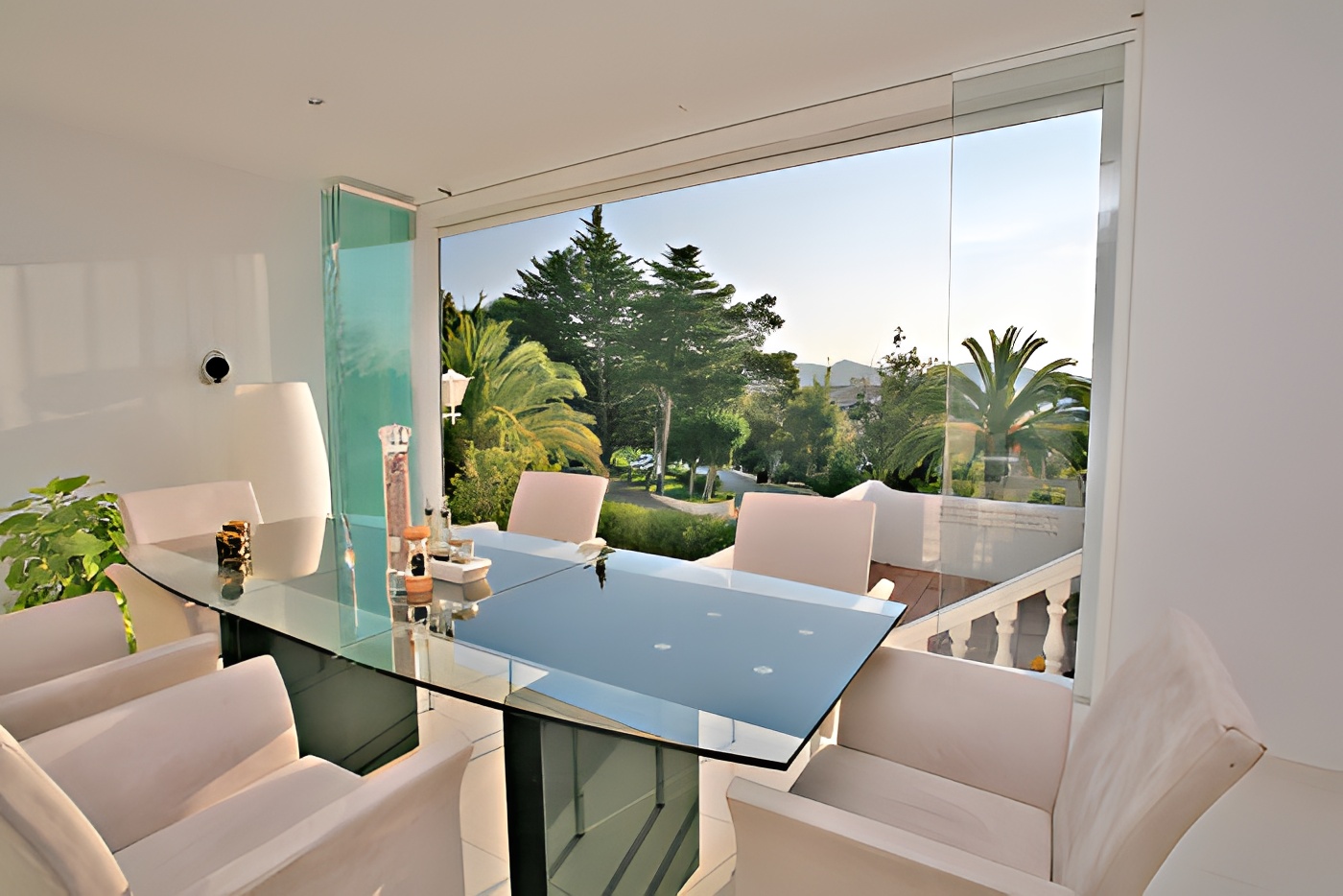
- Winter here is wet and windy, not cold. Block the weather and the space becomes usable straight away.
- Glass curtains give views and full summer opening; aluminium gives real insulation. They solve different problems.
- If the porch has no solid roof, the roof comes first. Enclosing the sides under a leaking roof creates an indoor leak.
- Community permission is the slow part and the part nobody controls. Start it before you have a final quote.
- September is the month. November is already late.
What winter on this coast is actually like
The short answer
People stop using their porch in winter here not because of temperature but because of wind and rain. Enclose it with glass, sort the roof, and the same space works from October to April with very little heating.
If you are used to a northern European winter, the numbers on a weather app will mislead you. Daytime temperatures on the Costa del Sol stay mild all winter. What the app does not show is the Levante, the easterly wind that arrives in sustained gusts, and the poniente storms that bring the real rain between October and March. Wind chill on an open terrace in January is the reason the furniture goes unused, not the thermometer.
This matters because it changes what you need to buy. In a colder climate you would be shopping for insulation. Here you are shopping for a windbreak that keeps the view - which is why frameless glass is the standard solution on this coast and heavy insulated systems are the exception.
Which system fits which porch
The useful question is not which system is best, but which one matches your porch, its orientation and how you actually use the property. A front-line apartment in Estepona and a sheltered garden porch in Nueva Andalucía do not need the same thing.
| Your porch | What usually fits | Why |
|---|---|---|
| Has a roof, you want the view | Glass curtains | No vertical frames, and the panels stack fully open in summer |
| Very exposed to wind or sea | Guillotine glass | Guided panels, better sealing, motorised operation |
| No solid roof | Bioclimatic pergola, then side closures | Roof first; the sides are added afterwards |
| Punishing west-facing sun | Zip awning over the glass | Glass stops wind, fabric stops the radiation |
| Only the draught bothers you | Glass windbreak | Cuts the wind without enclosing the space |
| You want a genuinely warm room | Aluminium with thermal break and double glazing | The only option that insulates properly, at the cost of visible frames |
- Glass curtains for panoramic sides you can open completely in summer.
- Guillotine glass where the opening is large or the porch takes the full force of the wind.
- Bioclimatic pergola when the porch has no solid roof and you want adjustable louvres.
- Zip awning for solar control on hot facades, often fitted over glass rather than instead of it.
- Glass windbreak when a single exposed side is the whole problem.
What glass will and will not do
This is the part worth reading twice, because it is where expectations go wrong. A frameless glass curtain is made of tempered glass panels that slide and pivot. Between the panels there is a seal, and along the bottom track there is a working tolerance. That tolerance is not a defect - it is what allows the system to open.
So a glass curtain turns an unusable windy terrace into a room you sit in almost all year. It stops the draught, stops the rain, and holds a surprising amount of the day's solar heat. What it does not do is behave like a window. There is no sealed cavity, no double-glazing acoustics, and on a cold January night you will know you are on an enclosed terrace rather than in the living room.
The question to ask yourself is not how much it insulates, but what you want to do out here in January. If the answer is eat, read, or let the children play out of the wind, glass is more than enough. If the answer is knock the terrace into the living room and heat it, you want aluminium with a thermal break.
We set out the real limitations of the system, without the sales gloss, in glass curtain drawbacks on the Costa del Sol. If you are still choosing, frameless glass curtains explained covers how the system actually works.
Permission, and why it takes longer than you expect
For overseas owners this is almost always the step that derails the timetable. Enclosing a porch or terrace changes the external appearance of the building, and in a Spanish community of owners - the comunidad de propietarios - that normally requires the agreement of the owners' meeting, not just a word with the administrator.
Two things make this slower than it sounds. First, your community meets when it meets, and that date is not negotiable. Second, if you are not resident, you may need to give someone a proxy to vote on your behalf, which adds another round of correspondence. On top of the community, each town hall on the coast has its own ordinance about what may be enclosed and how.
The common mistake is waiting until you have a final quote before approaching the community. Do it the other way round: book the survey and start the permission process in parallel, so that when approval arrives the project is already specified and only needs manufacturing.
Our community permission guide for Andalusia explains the process, the majorities involved and what is worth taking to the meeting.
Why September matters
Demand for enclosures on this coast rises the moment the weather turns, and everything is made to measure. There is no warehouse of standard porches. Here is what actually sits between a first phone call and a finished porch.
| Stage | What happens | Who sets the pace |
|---|---|---|
| Technical survey | Measurements, orientation, exposure, how you use the space | Us - booked within days |
| Tailored quote | System, glass, operation and finishes | Us |
| Community permission | Owners' meeting or authorisation under your statutes | Your community - the slow part |
| Manufacturing | Made to measure in our own workshop in Estepona | Us |
| Installation | Fitting and final adjustment | Us |
Only one of those stages is outside anyone's control, and it is the long one. That is the whole argument for starting in September: it gives the permission enough room to happen without costing you the season.
If the property stands empty over winter
A large share of terraces on this coast belong to homes that are shut up from October to Easter. Leaving an enclosed terrace unused for months has its own rules, and getting them wrong is how people come back in spring to a system that no longer slides.
- Leave the system closed and latched. A loose panel in a Levante gust is the fastest way to break a fitting.
- Clean the tracks and check the drainage holes before you leave. Summer leaves sand and salt compacted in the bottom track; a blocked drain turns ordinary rain into standing water inside.
- Leave no moisture behind - no watered plants, no damp textiles, no floor mopped on the last evening.
- Arrange monthly ventilation with whoever looks after the property, or leave a trickle vent open if the system allows it.
- Cover or remove soft furniture. Closed and unventilated all winter, an enclosed terrace holds its damp.
- If you are on the front line, book the annual hardware check. Salt air does not take the winter off.
What to clean, lubricate and replace by season is set out in glass curtain spare parts and maintenance. We supply parts and service across the whole Costa del Sol, and we manufacture and install ourselves, so the person who surveys the job is the one who answers for the result.
Five mistakes that show up in January
- Enclosing the sides and leaving the roof for later. If the roof is not watertight, you have simply built a room with a leak in it. The roof goes first.
- Choosing the system on price without looking at the orientation. The enclosure that performs perfectly in a sheltered courtyard falls short on a front-line penthouse.
- Forgetting drainage. Frameless glass curtains are not designed to be watertight at the bottom track. If the floor does not drain, whatever comes in stays in.
- Leaving permission until last. It is the only step you do not control, and it is always the longest.
- Not servicing the system you already have. A porch enclosed eight years ago with worn brushes lets the wind straight through. A service costs a fraction of a new enclosure.
If you are weighing up the investment, how much do glass curtains cost in Spain sets out what actually drives the figure - measurements, glass thickness, number of panels, motorisation, access and finishes - and why a price per square metre from the internet tells you almost nothing about your own terrace.
When you are ready, book a survey with no obligation through contact. We work in English and Spanish, so nothing gets lost between the survey and the installation.
Frequently asked questions
Can I open everything again in summer?
Yes, with glass curtains or guillotines designed to stack fully open. The curtains fold and slide against one side, leaving the opening almost completely clear; guillotine panels drop down. That reversibility is exactly why these systems suit holiday homes and rental properties.
Do I need permission?
Usually yes, because enclosing a porch changes the external appearance of the building. It depends on your community statutes and on your town hall's ordinance. Start the process early - it is the one stage neither you nor we can speed up.
When should I start if I want the porch ready for winter?
September. The survey, the quote, community approval and made-to-measure manufacturing fill the autumn between them, and community approval moves at your community's pace. Owners who call in November typically use the porch for the first time in spring.
Will an enclosed porch be warm enough without heating?
On this coast, often yes during the day. A south or south-west facing porch collects solar heat through the glass and releases it into the evening. On cold nights radiant heating works best, because it warms surfaces and people rather than air, which suits a glazed space.
Why does the glass mist up on the inside?
That is condensation: warm, damp indoor air meeting a colder pane. It is normal with single glazing and is managed by ventilating daily, keeping the seals and brushes in good condition, and controlling sources of humidity. It only indicates a fault if water appears when it rains, always in the same place.
Can I have this done while I am not in Spain?
Yes, and we do it regularly. We survey, send the specification and photographs, and coordinate with your administrator or key holder for access. The one thing that genuinely needs your involvement is the community authorisation, since your vote or a written proxy is normally required.
About CostaGlass
CostaGlass designs, manufactures and installs glass curtains, pergolas and terrace enclosures directly - based in Estepona (Málaga) with over 10 years of experience across the Costa del Sol. Our bilingual team (English and Spanish) handles the survey, manufacturing and installation with no middlemen.
+34 856 171 651·info@costaglass.com